
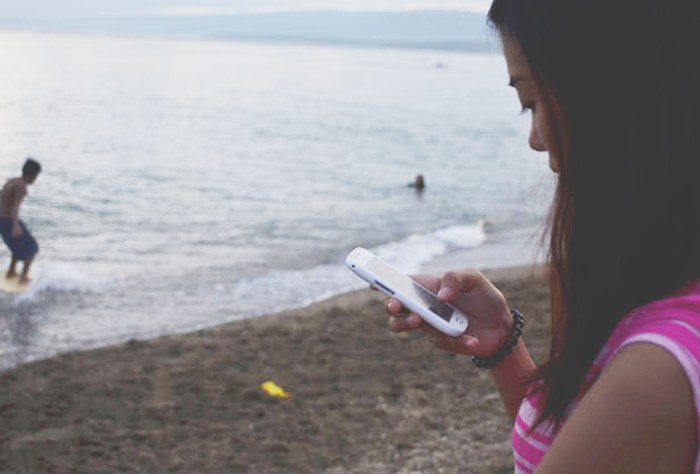
If your unanswered texts get your heart rate going or somehow interrupts what you’re doing – whether it’s writing a college expository essay or spending quality time with your family – to check your cellphone.
Sometimes you could’ve sworn that you’re hearing your ring tone or feeling your phone vibrating in your pocket, but when you took it, you saw that no message arrived. If you think that’s normal, you should think again.
That’s an indication that you’re too attached to your cellphone. Imagine your daily life being influenced by a single gadget as you get attached to it day-by-day. As time goes by, it’s getting harder for you to put away your cellphone. If you’re not aware, your Attachment with your phone changed and stirred you. But don’t worry you are not alone, well in fact according to Ipsos Media Atlas Philippines Nationwide Urban 2011-2012 survey “about 89 percent of Filipino Population is now using cell phones and 30 percent says that mobile phone is a necessity and added that It’s their cell phones – they can’t live without”(Roa, 2012). Cell phones have greatly changed everyone’s lives. It has changed the way they think which gradually changed the way they work. To understand more about it, stick in and trust me….. there’s more than you think!
Let us understand more about attachment. According to John Bowlby “Attachment is important in regards to personal development. Which explains why people specially teenagers are linked with their cellphones. They felt highly of themselves when they are with their phones. He added that “Specifically, it makes the claim that the ability for an individual to form an emotional and physical “attachment” to another person gives a sense of stability and security necessary to take risks, branch out, and grow and develop as a personality”(Bowlby, 1969). But in this case, it explains an attachment from a human to another human. As to relate with our context, an attachment between Humans and Mobile phones are correlated with what Bowlby was saying about the sense of stability and security contributing to the development of deep attachment. As we all know Cellphones has multi-purpose features which made our lives easier upon owning one. We can take pictures with it (selfies in particular to impress social media), play games with it (through social media like – Clash of Clans) and send messages with it. With all these convenient services, users feel secured and complete with their cellphones on hand as they can access almost everything easily. At the same time, they can maintain social stability along with friends.
To inform you more about what “attachment” can do, let me tell you a story about the Greek myth of Narcissus. The young boy narcissus confused his own reflection in the water for another person. According to McLuhan “This extended version of himself (the reflection) numbed his own perception of things- as the word narcissus implies from a Greek word narcosis, or numbness – until he became a part of an illusion. He had adapted to his extension of himself and had become a closed system”(McLuhan, 1964). What McLuhan is trying to imply is that attachment made illusion for humans to treat their cellphones as part of them. Yes, just like an extended arm or an additional organ which is of course a harmful thinking.
As a consequence of continuous attachment to mobile phones, Cellphone Addiction is a serious problem that should be taken seriously as well. This effect can cause numerous chain reactions within our brain that leads to other psychological effects which made it like the “Mother Effects of effects”.
Have you noticed yourself when you’re sad? And when you grabbed your cellphone, you started to feel well. The one responsible for that is your brain. The reason behind this is the satisfaction caused by your attachment to cellphone. As you get more comfortable with it triggers your brain to release the serotonin and dopamine hormones—the “feel good chemicals” in our brains—providing an instant gratification just like addictive substances do, says therapist and addiction expert Paul Hokemeyer, Ph.D (Anderson, 2015). Due to continuous production of these hormones, chances are great that it will lower the level of dopamine and serotonin. Our mental health will then be impaired. Low dopamine can be a major contributor to depressive symptoms. Anyone with abnormally low dopamine is likely to experience depression and anxiety.
Being addicted and abnormally attached with cellphones can causes people to adhere stronger and stronger towards cellphones. As a result, they develop “Cellphone Separation Anxiety”. You’re habits of bringing your mobile phone at the bathroom, putting it under the pillow during sleep time, or putting it at the table while eating meals. This indicates that you are suffering a nomophobia. Though it may sound like it, nomophobia isn’t the fear of being “CUTE”. It’s the fear of being out of mobile phone contact.
CNET research shows that “Nearly 60 percent of respondents can’t stand an hour without checking their phones and 54 percent even couldn’t resist checking their phones while lying on bed. Going to church reduced that by quite a bit, but 9 percent still confessed to checking their phones during worship services” (Amanda Kooser, 2012).
Their was a study in Britain titled “The World Unplugged project” which asked more than 1,000 students from 10 countries around the world, to go without any media for 24 hours and monitored their feelings (Alleyne, 2011). As teenagers got separated with their mobile phones, they encountered numerous psychological effects. Without their phones; they felt anxious, depressed, and restless. The study shows that teenagers felt that something is cut off; it stimulates similar feeling as a “missing limb” suffered by amputees. Some said that they hallucinated in hearing their ringtones or feeling vibrations in their pockets. As you can see, problems involving cellphones is getting serious, it reached to the point that cellphones are now manipulating users’ personal habits.
Moreover, excessive attachment to mobile phones can also lead to “Depression”. It is a recent common effect caused by cellphone attachment. It may sound impossible and exaggerated but what I’m telling is true. You remembered that time when you and your special loved one had a date in a seemingly nice restaurant. All the ambiance was there but your date didn’t feel that special anymore because you kept on facing your mobile phone. And in the next morning, you have a quarrel about that night and you don’t understand why. Well, that’s because you’re phubbing him. If you’ve never heard the word “phubbing” before, that’s alright. Until recently, it didn’t exist. “Researchers at Baylor University coined the term as a portmanteau of the words “phone” and “snub” to refer to a specific pattern of cell phone usage”(Laukkonen, 2015). Phubbing seems like a little thing, but your partner who is phubbed is not feeling that way and mostly ignored which amplifies the effect. “Specifically, distraction caused by cellphones during a quality time allotted by a significant other, would most likely lead to an enhanced feelings of depression and lower the well-being of that certain individual.” (David, 2015). In short, it’s always better to understand and be open-minded about this. So that the damage can’t be done or at least lessen. It’s good that the next time you go out with your boyfriend or with your family, you can notice that you’re habit is not good and you can put away your phone.
If you’re staying late regularly at night playing games with your cellphone or chatting with your friends at facebook. I’m quite sure that you are experiencing Insomnia or habitual sleeplessness. According to research, prolong exposure of blue light during night time can disrupt your internal body clock. As stated by Dr. Mercola (Bestselling author of health related books) that “The radiation may also disrupt production of the hormone melatonin, which controls your body‘s internal rhythms”. Melatonin is the hormone responsible to that sleepy sensation when you’re tired or stressed (Dr. Mercola, 2008). A study was made to try to identify how the exposure affects the brain. They exposed 35 men and 36 women radiation equivalent to that received when using a cell phone as an experimental control. Those who were exposed by the radiation entered the deeper stages of sleep a little bit longer than those who are not. Researcher Professor Bengt Arnetz said that, “The study strongly suggests that mobile phone use is associated with specific changes in the areas of the brain responsible for activating and coordinating the stress system.”
After about 9-10 hours of being awake, normally people start to run out of gas. Notifying their internal clock to release a surge of slumber-inducing hormone to facilitate sleep. Light exposure in the night time delays the melatonin surge which causes Insomnia. (Czeisler, 2008). Basically, attached users sleeping habits are deprived and disorganized . Sleeping away from your phone can help your body work normally and let the melatonin do its job.
In a nutshell, Too much attachment towards your cellphone can cause psychological addiction, minor depression, separation anxiety, and insomnia. Cellphones may have offered us so many services that helped us in working with our lives. But it is also good to note that in everything there is always a bane in every boon.

 Memento Vivere